
A wet floor beside the water heater is a call we hear about constantly, and the first question is always the same: where is it actually coming from? Water travels along pipes and collects wherever the floor dips, so the puddle is often nowhere near the source. It might be the temperature and pressure relief valve or its discharge line, the drain valve near the bottom of the tank, the inlet and outlet fittings on top, condensation on a cold tank, or a nearby pipe that has nothing to do with the heater. It might also be the tank itself, and that answer changes everything. In Williamsburg, VA, we start every leak call by finding the true source.
Our diagnosis is methodical. We dry the area, look at the T&P valve and the end of its discharge pipe, inspect the drain valve, and follow the hot and cold lines up to the fittings on top of the tank. On gas units, we check the combustion chamber for water, which can point to condensation or, more seriously, a failing tank. If the relief valve has been discharging, we put a gauge on the system to read static pressure and check for thermal expansion, since a closed plumbing system without an expansion tank can spike pressure every time the burner runs. After all of that do we recommend a fix.
With the source confirmed, the fix is often simple. A new T&P valve, a brass drain valve in place of a weeping plastic one, fresh dielectric fittings or supply connectors, and an expansion tank or pressure-reducing valve where pressure is to blame can all be handled on the spot. A corroded tank is different. No sealant or patch will hold, so we explain replacement honestly and walk through the choices. Before we leave, we can add a drain pan with a drain line and a leak sensor, which matters most for heaters above finished space. Call (757) 290-7408 for leak repair in Williamsburg.
Our two most requested services are Water Heater Repair in Williamsburg and Water Heater Replacement in Williamsburg. Start there if you're not sure what you need.
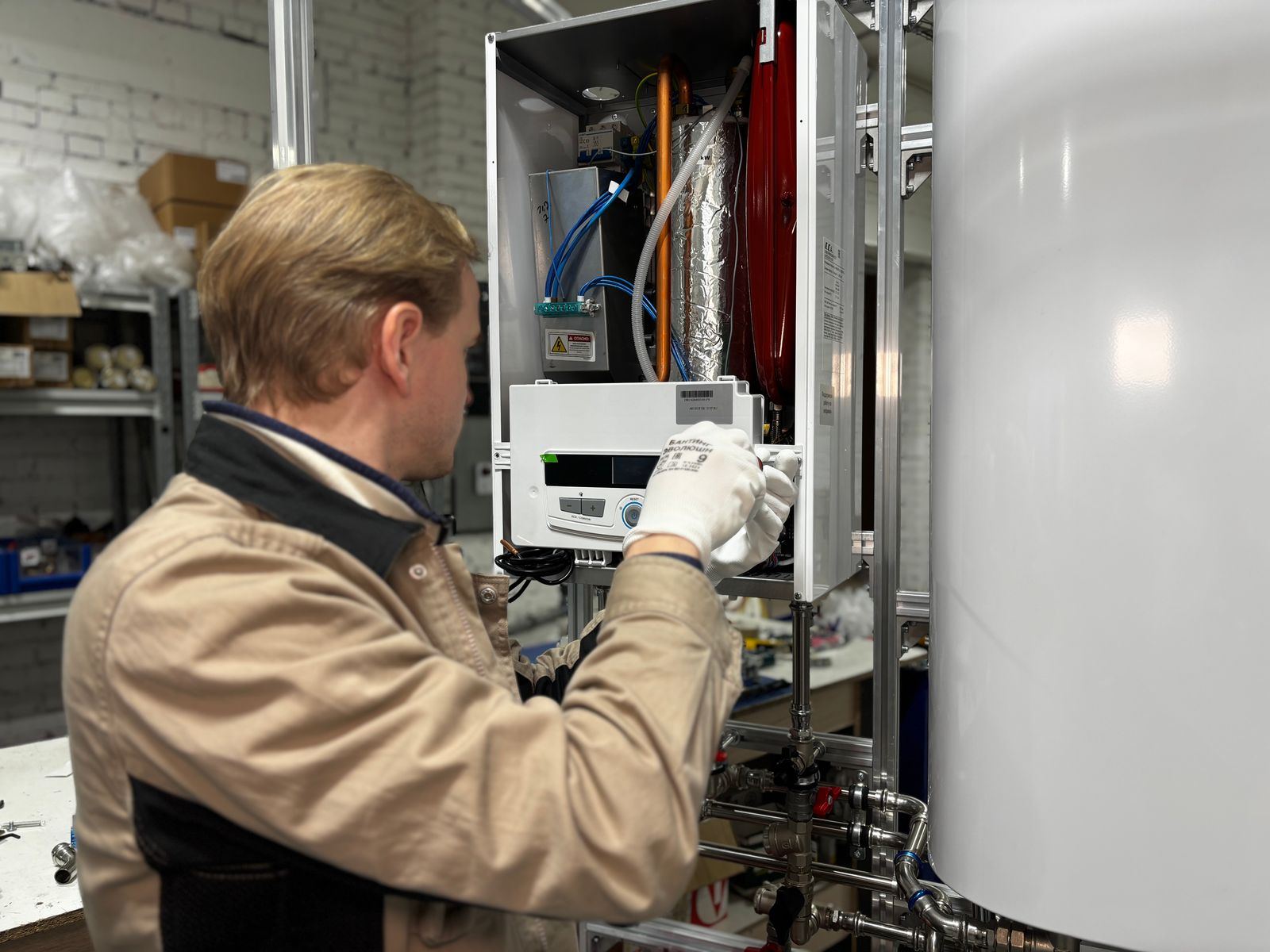
Signs You Need Water Heater Leak Repair in Williamsburg
Catching a symptom early is often the difference between a quick part swap and a tank that gives out on the garage floor. Here are the most common indicators that it's time to call a professional:
- A weeping drain spigot on the lower front of the heater
- Rust, green corrosion, or white crust on the fittings at the top of the tank
- Warped baseboards or stained drywall beside the water heater
- A T&P valve line that drips or releases water now and then
- A wet floor near the water heater that keeps coming back
- Brown hot water along with moisture around the tank bottom
- Higher water use with no obvious explanation
- Water inside the burner compartment of a gas heater
A Slow Leak Never Stays Slow
Tanks rarely fail all at once. They corrode from the inside for months, and the warning signs show up long before the floor gets wet. At the first hint of a problem, reach out to Williamsburg Water Heater at (757) 290-7408 and we'll take a look.
Water Heater Trouble? Call Us.
One call gets a technician scheduled and a clear price before any work starts.
Tap to Call (757) 290-7408Your Water Heater Leak Repair Questions Answered
Why Hire a Professional for Water Heater Leak Repair?
The hardest part of leak repair is the diagnosis. Water travels along pipes and the outer jacket before it drips, so the puddle rarely marks the source, and harmless condensation on a gas unit or a cold tank can pass for a leak. Guessing leads to replacing the wrong valve or, worse, missing a tank that is on its way out. Safety matters here too: a relief valve that is discharging is protecting the tank, and plugging it is dangerous. Brittle old fittings can snap under force, and wet floors near 240-volt wiring is a real shock hazard.
Calling a professional buys you certainty. We find the actual source, fix it with the right parts, and look for the reason it failed. When a relief valve drips, we test pressure and expansion. When a fitting is rotten, we replace the connection rather than tightening it harder. When condensation is the only issue, you hear that, and you keep your money. And when the tank itself is leaking, we recommend replacement honestly, with a drain pan, drain line, and leak alarm to limit damage if it ever happens again.
From Your Call to Hot Water
We work through a clear, repeatable process so you always know what's happening and what it will cost. Here's how we handle water heater leak repair from start to finish:
Contain the Water
First the water gets stopped. We confirm the supply valve is closed, the heater is off, and the area is safe to work in.
Trace the Source
Every likely source gets checked: T&P valve, drain valve, inlet and outlet fittings, connectors, condensation, and the tank itself. Nothing gets replaced on a guess.
Measure What Caused It
If a relief valve is involved, we measure static pressure and check for an expansion tank, since high pressure makes even new valves drip.
Fix and Confirm Dry
We replace the failed part, refill and purge the tank, restart the heater, and confirm every joint stays dry. A leaking tank gets an honest replacement recommendation instead.
Simple Ways to Extend Your Water Heater's Life
Routine maintenance is almost always cheaper and easier than an early replacement. Follow these tips from our technicians:
- Install a drain pan piped to a safe spot, which matters most for attic, closet, and upstairs heaters
- Have household pressure measured, since high pressure wears out relief valves and fittings faster
- An expansion tank that is present and properly charged keeps the relief valve from opening every cycle
- Put a water leak sensor on the floor next to the tank so a drip gets noticed early
- Make a habit of checking around the heater for moisture or corrosion every few weeks
- Have the anode rod checked every few years; once it is used up, the tank starts to corrode
- Annual flushing removes sediment that traps heat against the tank floor
DIY vs. Professional Water Heater Leak Repair
The line between a safe DIY check and a risky repair is usually the moment you need to open a gas fitting, a vent connection, or an electrical cover. Here's how the two approaches stack up:
| Factor | DIY Attempt | Professional Service |
|---|---|---|
| Finding the Source | Fix the part nearest the puddle | Surfaces dried and each source confirmed |
| T&P Valve | Drip silenced, pressure problem left behind | Valve and pressure both addressed |
| Corroded Connections | Tightened until the fitting cracks | Dielectric unions and connectors rebuilt |
| Condensation vs Leak | Unneeded parts or a whole new heater | Only real problems get repaired |
| Protecting the Home | Floors left exposed to the next leak | Protection added where it matters most |
| Outcome | Source unconfirmed | Leak solved and cause corrected |
Get Water Heater Leak Repair Help Today
Don't let a failing water heater get worse. Call Williamsburg Water Heater now for prompt, professional service.
Call (757) 290-7408 NowWater Heater Leak Repair Across the Williamsburg Area
Wherever you are in the area, the same experienced team shows up with the same parts and the same pricing. Find your community below.